
Hoof cracks in horses: Understanding, managing, and treating this hoof condition.
Pathophysiology of hoof cracks
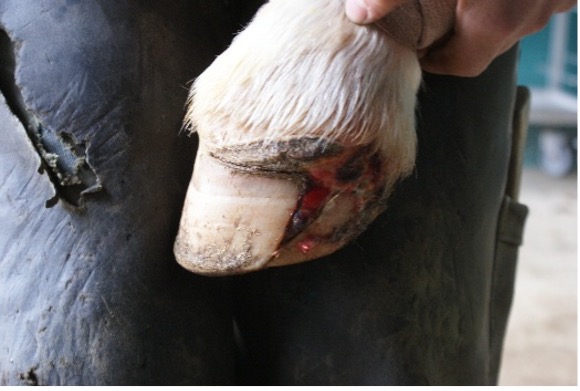
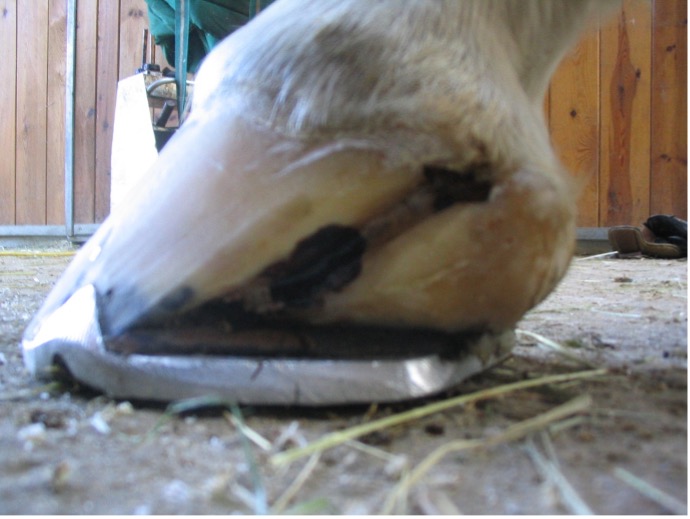
A hoof crack is a fissure located in the hoof wall, which can present in several forms, either ascending or descending. Its mobility and severity can also vary. In addition, the methods used to manage and treat it may differ.
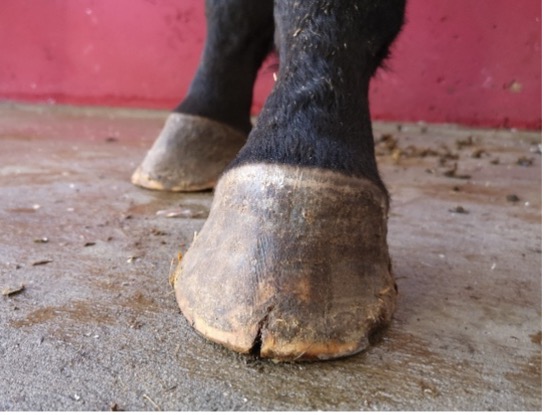
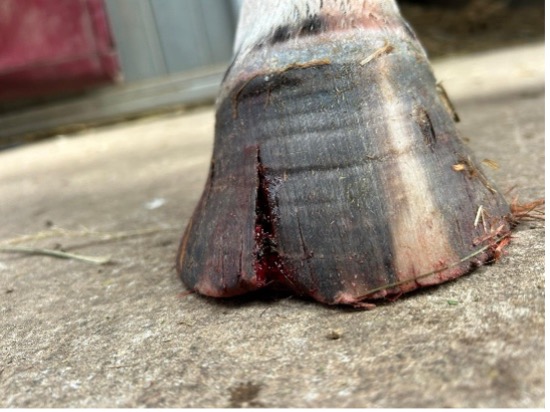
The most common and frequent type is the pasture crack. It often begins in the distal part of the hoof and worsens when the hooves are too long (excessive flare), as well as when they are flared or collapsed. It appears most often on barefoot hooves and can affect all parts of the hoof: toe, quarter, heel, and bars. This pasture crack is commonly defined as an ascending crack.
Some cracks appear when the hooves are structurally weak (degraded white line and/or hoof wall), or in cases of crumbly hooves or hooves with irregular or excessive wear. In certain cases, small stones become lodged in the white line and damage it, as well as the horn tubules of the hoof wall. These deteriorated hooves may also be prone to the development of white line disease.
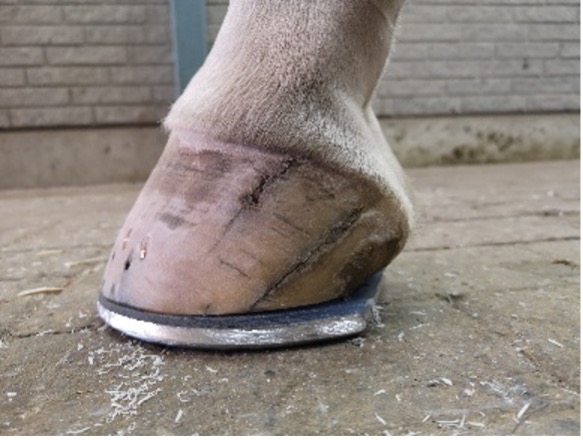
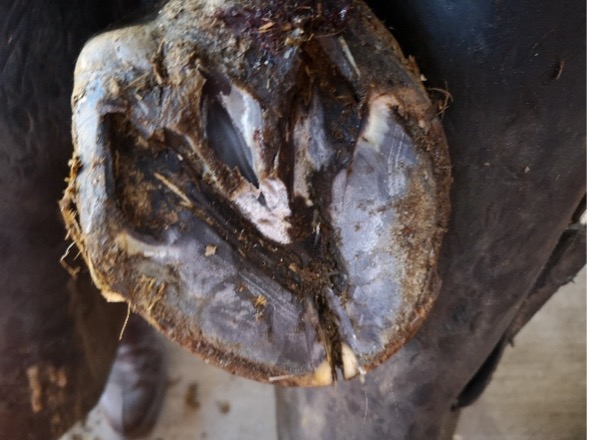
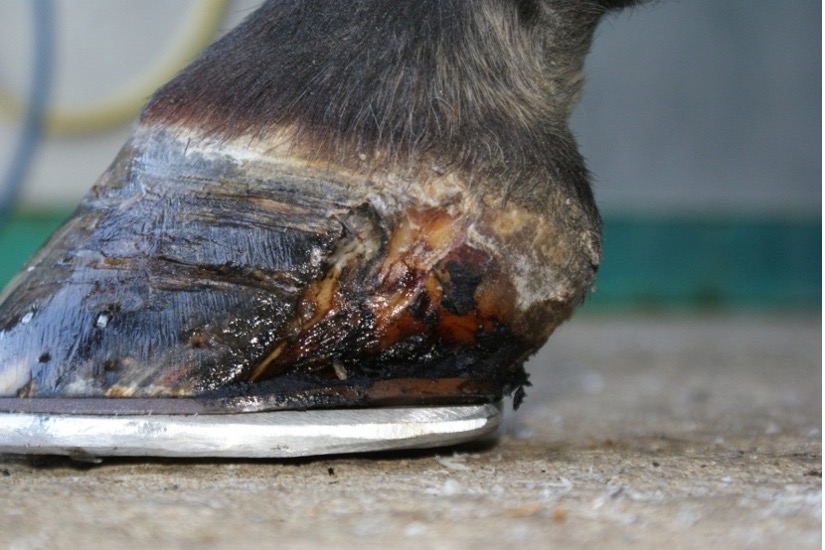
Descending cracks can also be encountered, which begin at the coronary band. These follow the opposite path of ascending cracks. Sometimes, this type of crack appears due to an anatomical deformity, for example at the level of the cuticular groove (at the coronary band), which is the site of horn production. This area may have been previously damaged, typically when a wound has affected both the coronary band and the hoof.
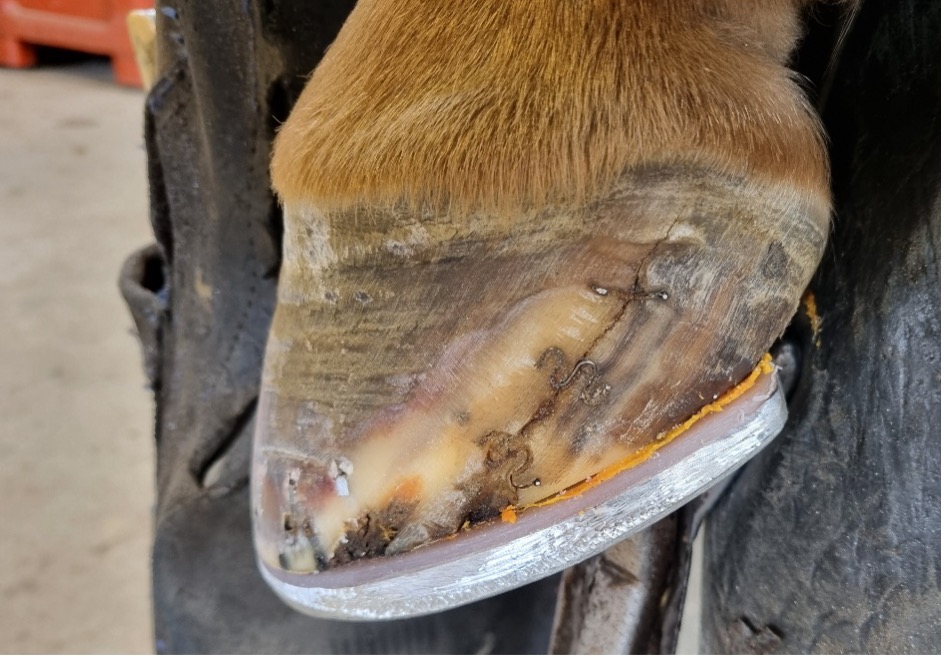
This area is often weakened as a result of poor healing, leading to impaired horn growth.
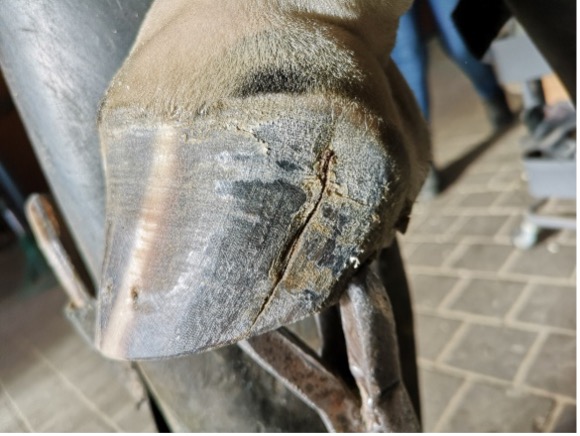
There are also cracks caused by poor hoof mobility (elasticity), which create stress on the horn tubules. Depending on the case, these stresses are linked to conformational defects, such as misalignment of the phalangeal axes, both in the frontal plane (latero-medial imbalance of P3) and in the sagittal plane (flat feet or, conversely, club feet involving a modified palmar angle), or to a severe collapse of P3.
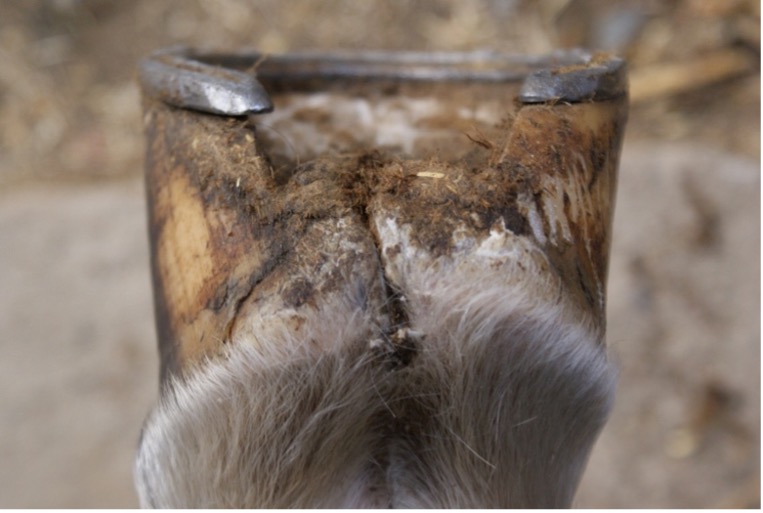
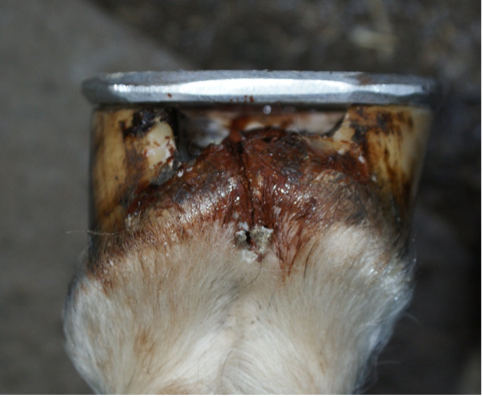
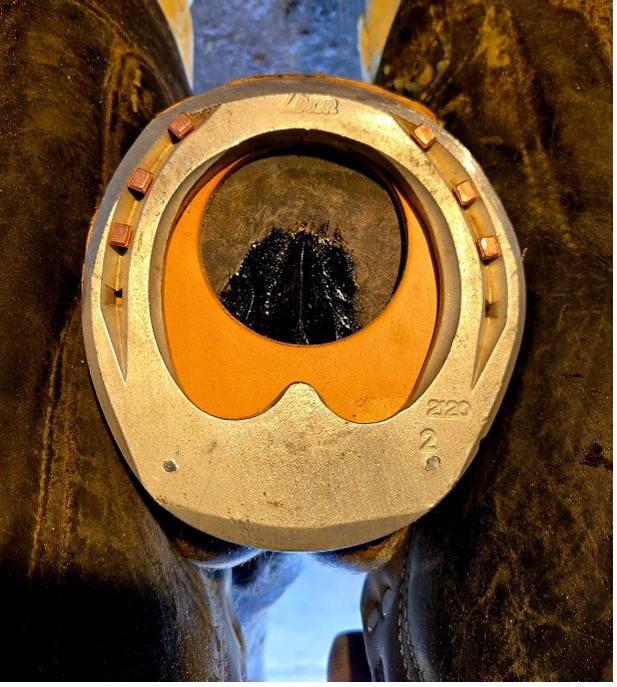
Before shoeing: deformation of the shoe plane / After fitting a bar shoe: stabilizes the hoof on soft ground. [See ACR 400]
Note: What is commonly referred to as a horizontal crack is not truly a crack, but rather a separation of the hoof wall caused by an abscess or an impact on the coronary band. This separation moves downward with horn growth and disappears when it reaches the bottom of the hoof. At that point, the farrier can trim it.
Management and Treatment of Hoof Cracks
Key elements for managing a hoof crack:
-
Regular trimming
-
Appropriate shoeing. In some cases, imaging is necessary to assess the depth of the crack.
-
Staples or screw-on plates
-
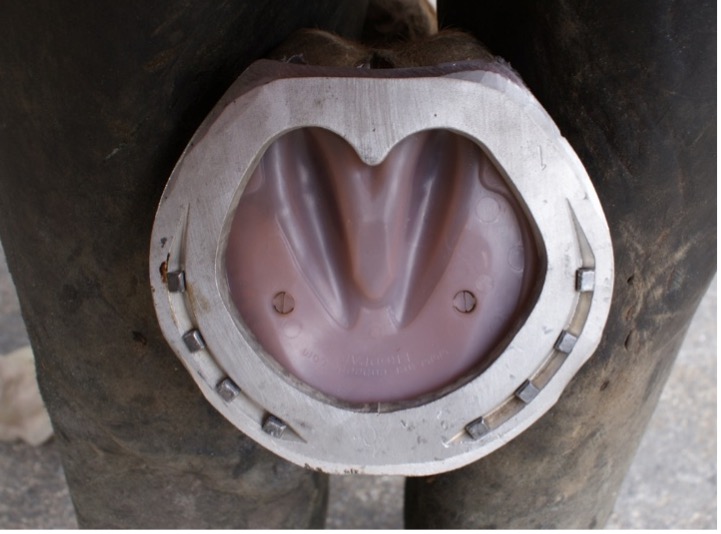
Support of the frog: supportive silicone, Equi Cast, McLane-type plate, heart shoe, bar shoe, ¾ shoe, or star shoe
-
Hot tips
To treat a hoof crack, several parameters must be evaluated: its length, depth, and mobility when the hoof bears weight and is lifted. It is important to check whether the crack closes under load or opens; sometimes it can overlap or shear.
The first step is to perform regular trimming to reduce lever forces. These levers (stress on the hoof wall) are often the cause of cracks that do not heal! Before shoeing, it may sometimes be necessary to thoroughly clean the crack from bottom to top (optional for descending cracks).
It is often preferable to reduce the crack’s mobility with shoeing that stabilizes and distributes the load on the hoof. Depending on the situation, a bar shoe or heart shoe is often used. This type of shoeing is frequently combined with the removal of pressure points near the crack to minimize load on it as much as possible.
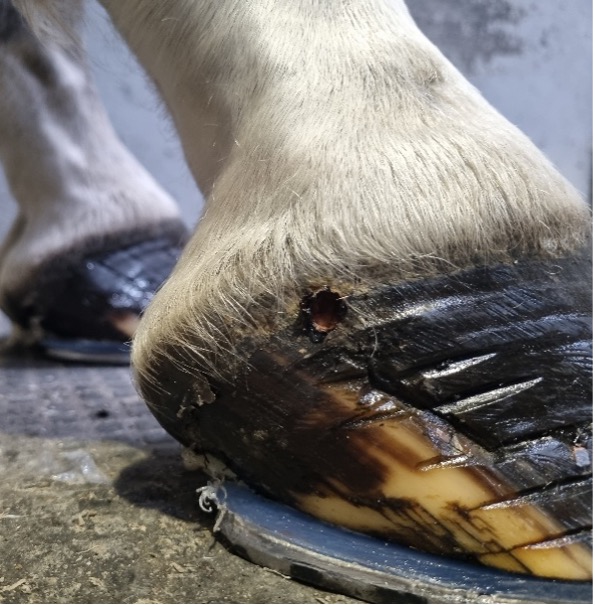
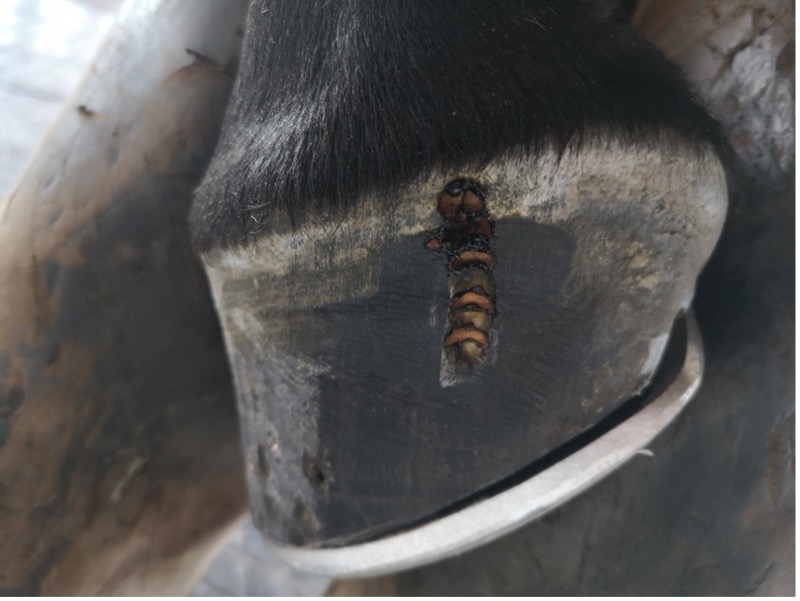
It is recommended to use multiple pins, positioned according to the location of the crack, to limit the natural elasticity of the hoof capsule, which amplifies the opening and closing of the crack. In extreme cases, where fitting a shoe is difficult due to a defective hoof or the risk of the shoe coming off, the use of resin strips (Equi Cast) is a good alternative.
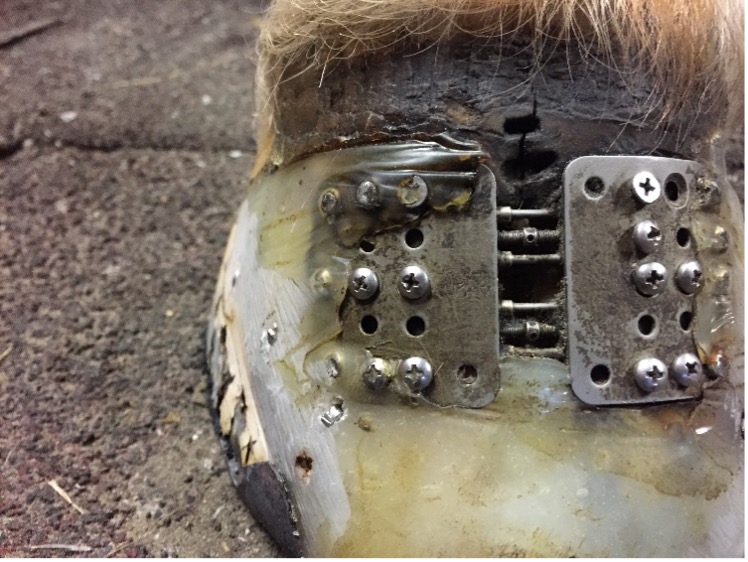
The use of methacrylate polyurethane resin (Glu-U Shoe Fix or Shoe Feet) can help fill and stabilize the crack. This is an interesting option depending on the case and the farrier’s preference. Sometimes, it may be necessary to fix both edges of the crack, for example with staples, fixation plates (Michael Pool), or other reinforcement systems (e.g., a heated steel serpentine strip applied to the hoof wall). Using these various techniques requires a solid knowledge of farriery and hoof anatomy.
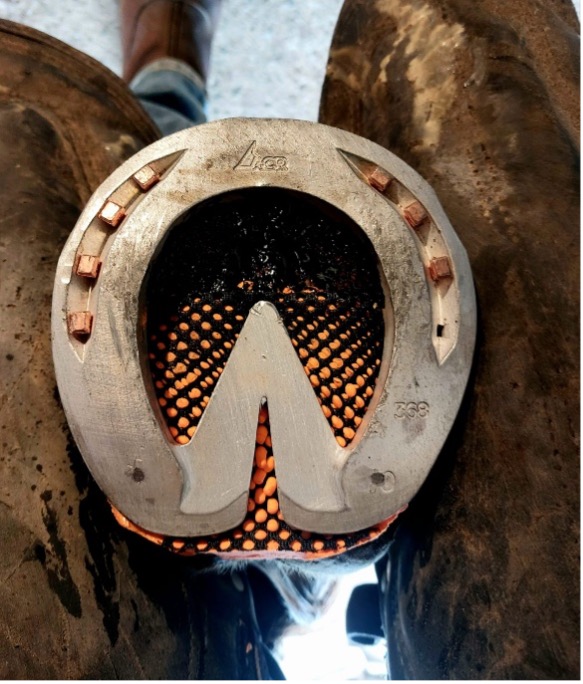
At the end of shoeing, it can be useful to cauterize the origin of the crack with a hot tip, creating a clear separation between the healthy horn and the crack.
It is also important to keep the hoof well-hydrated by applying natural hoof grease daily. This penetrates the hoof wall to nourish the horn.
Finally, regular appointments with the farrier are essential, and shoeing should not be spaced too far apart. After 5 to 6 weeks, new growth can promote the opening of the crack—precisely what we want to avoid.
Environmental factors such as ambient temperature, humidity, living space, and stall hygiene also have a significant impact on the development of this condition.
As you can see, the causes of hoof cracks are multifactorial. The horse’s breed, use, care, and therapeutic options vary widely. It is therefore essential to consult both your farrier and veterinarian to ensure proper healing if your horse develops a crack.
Key points to remember:
- It is important to distinguish between an ascending crack and a descending crack.
- Causes of hoof cracks include: overly long hooves, weak hoof structure, irregular wear, anatomical deformities, and mechanical stress.
- A thorough evaluation of the crack (length, depth, mobility, opening under load, overlap) is essential to determine the therapeutic strategy.
- Most of the time, stabilization techniques are necessary: staples, plates, resin, serpentine strips, etc.
- Prevention can be achieved with simple measures: regular farrier visits, proper hoof hydration, and good living and hygiene conditions.
- Treating hoof cracks sometimes requires collaboration between farrier and veterinarian.
By Antoine CORONA, Farrier
